
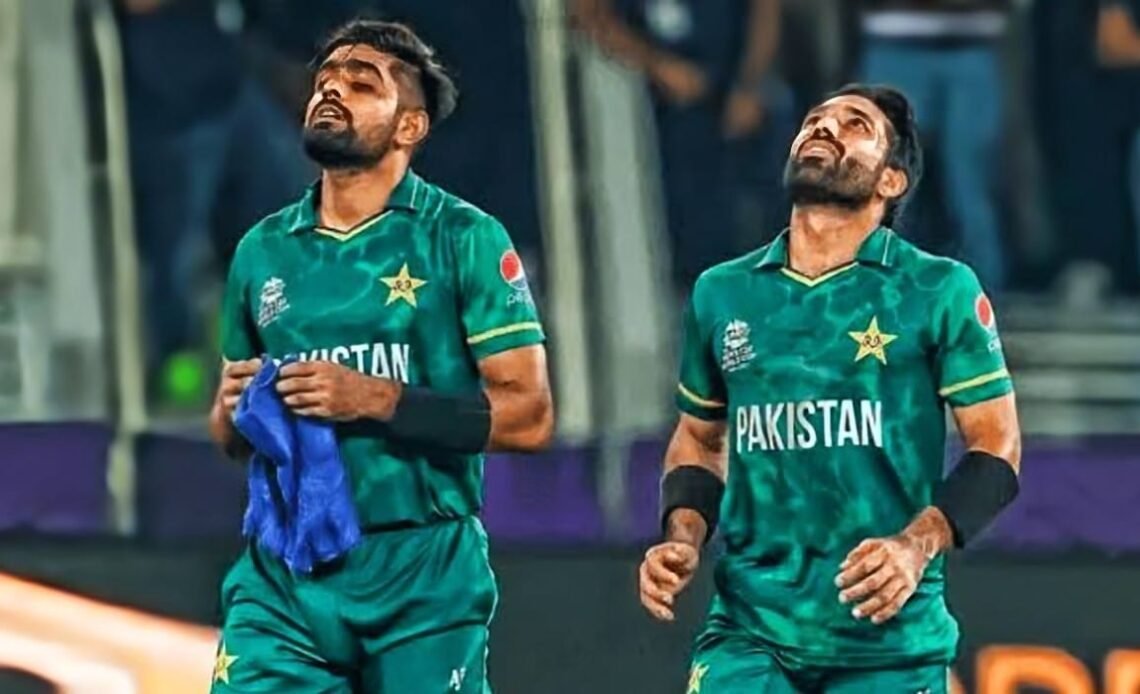
Is This the End of Babar and Rizwan in Pakistan T20?
Pakistan’s announcement for the upcoming Asia Cup and tri-series has stunned cricket fans. Babar Azam and Mohammad Rizwan, once inseparable figures in the batting order, have not been recalled. Neither has played a T20I in 2025, but many expected their names to reappear before the Asia Cup or World Cup 2026 buildup. Instead, selectors have doubled down on youth.
For a long time, both players carried Pakistan’s batting in white-ball formats. They opened together, stitched crucial partnerships, and at times carried the team single-handedly. However, cricket is an unforgiving sport. Form, fitness, and adaptability decide careers more than reputation. The question now echoes everywhere: have Pakistan’s two biggest names in T20 finally reached the end of their road?
Babar Azam: From Icon to Omission
Few Pakistani cricketers have enjoyed the fame that Babar Azam achieved. His classic cover drives and remarkable consistency once made him the poster boy of modern batting. As captain, he guided Pakistan to memorable moments, including the famous 2021 T20 World Cup victory against India. For years, he was the world’s number one ranked T20I batter.
But cricket evolves quickly, and T20 demands relentless aggression. Babar’s strike rate and approach often came under fire. Critics argued he slowed down the innings, putting pressure on the middle order. His inability to adapt to changing conditions in high-pressure games became evident.
The turning point was not just his runs but his body language. He appeared increasingly out of touch, both mentally and technically. Dropped catches, hesitant decision-making, and a lack of fluency in scoring reflected a deeper decline. By 2025, he found himself out of the squad altogether. The exclusion for back-to-back series now feels less like a temporary rest and more like a quiet farewell.
Mohammad Rizwan: Consistency No Longer Enough
While Babar faced criticism for his strike rate, Rizwan had a different narrative. He was the fighter, the man who built innings under pressure. From 2019 to 2022, he was Pakistan’s most reliable T20 player. His partnerships with Babar created history, often rescuing Pakistan from collapses.
Yet, the same formula soon became predictable. Opponents studied his weaknesses, especially against spin and pace at the death overs. Although still strong in ODIs, Rizwan’s impact in T20s began to fade. His last few T20 innings lacked the spark that once made him indispensable.
Selectors seem to have noticed this gradual decline. Despite his leadership role in ODIs, his absence in T20 is not accidental. Instead, it points to a strategy: Pakistan wants to refresh its batting core with more fearless, hard-hitting players rather than anchor-style accumulators.
A Wider Shift in Pakistan’s T20 Philosophy
Pakistan cricket has always wrestled with balancing experience and youth. This time, however, the choice feels deliberate. Under Salman Ali Agha’s leadership, the squad reflects a generational reset. Players like Saim Ayub, Sahibzada Farhan, and Mohammad Haris have been given the responsibility to play aggressive cricket from ball one.
The exclusion of both Babar and Rizwan highlights that selectors are prioritising strike rate over average, impact over stability, and aggression over tradition. It is a clear admission that the era of anchor-heavy batting is over.
For years, Pakistan struggled in crunch T20 matches despite having these two giants. Semi-final and final exits in ICC tournaments exposed the limitations of their approach. Now, Pakistan is choosing to break free from its dependency on the duo, hoping to create a team capable of matching global standards where teams like India, England, and Australia rely on explosive batters.
Are Their Careers Over—or Just on Pause?
The most pressing question remains: is this the end of Babar and Rizwan in T20 cricket?
Optimists argue that form is temporary. A strong domestic season or franchise league performance could force selectors to reconsider. Both players are too skilled to be completely discarded. Pakistan has a history of recalling veterans when needed.
However, realists point out that once players lose their place in the shortest format, comebacks are rare. Modern T20s require speed, reflexes, and adaptability. Younger players offer exactly that, while older stars struggle to reinvent themselves. With the 2026 T20 World Cup on the horizon, building a long-term squad seems more realistic than bringing back names who no longer fit the template.
Legacy of the Duo
Regardless of what happens next, Babar and Rizwan’s contribution cannot be erased. They gave Pakistan stability in a format that often thrives on unpredictability. Their record-breaking partnerships brought joy to millions and lifted the team to world number one.
But cricket is a game of phases. Greats too must give way to new challengers. While their legacy in Pakistan’s cricket history remains intact, their absence from the T20 setup will allow fans to evaluate their careers without sentiment.
The Final Word
The omission of Babar Azam and Mohammad Rizwan from Pakistan’s T20 squad for the Asia Cup and tri-series is not a small selection call. It represents a transformative moment. Pakistan has chosen to invest in youth, favour aggression, and move beyond old patterns.
For Babar and Rizwan, this could mean the end of their T20 careers. Or, perhaps, it is only a pause before an unexpected comeback. Either way, Pakistan’s cricket is entering a bold new chapter—one that will define not only the team’s future but also the lasting image of two of its finest cricketers.
Also read this : https://cric92.com/latest/pakistans-t20-squad-for-tri-series-and-asia-cup-2025-announced/